The Westminster Ledger: Parliament’s Open Questions on Dawn Sturgess
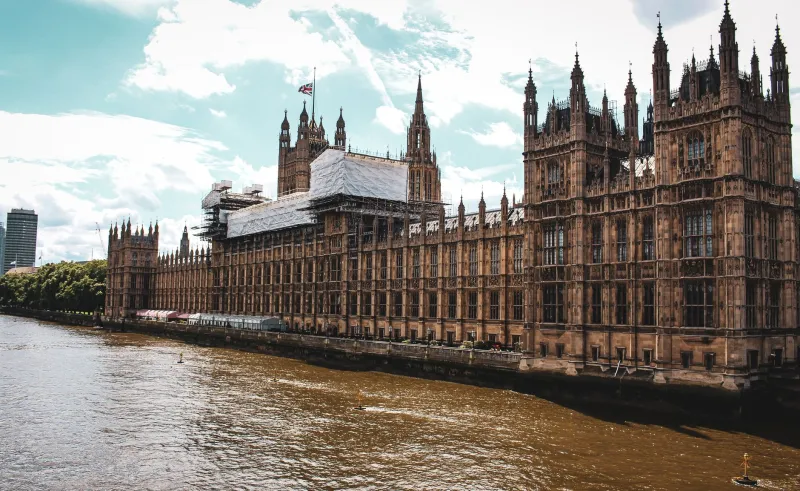
The inquest into the death of Dawn Sturgess is, properly, a judicial process. Its witnesses are sworn, its evidence is tested and its conclusions belong to the coroner and the jury. But the public interest in what happened in Salisbury and Amesbury in 2018 has never been confined to a courtroom. It has also been a parliamentary question — sometimes a precise written inquiry, sometimes a broad debate, often a brief reference in a select committee session that never quite became a headline.
That parliamentary record matters because it is separate from the inquest record. It shows what ministers were asked, what they chose to say and what they declined to explain. In 2026, with the inquest’s public hearings having generated a substantial documentary trail, the gap between those two records is a legitimate subject of scrutiny in its own right.
A Paper Trail, Not a Trial
Westminster does not conduct inquests. It cannot call a witness to give evidence under oath, compel the production of an intelligence file or decide whether a death was caused by an unlawful act. What it can do is require ministers to account for the government’s conduct in public, put answers on the record and create material that journalists, lawyers and bereaved families can use.
Written parliamentary questions are the most granular instrument. A backbencher can ask the Home Office, the Foreign, Commonwealth and Development Office or the Department of Health and Social Care about decontamination, clinical support, sanctions, police resources or the handling of evidence. A named-day question can force a department to think about timing. A debate in Westminster Hall or the main Chamber can give an issue a larger audience. Select committees can invite officials and ministers to explain, in more discursive terms, how decisions were taken.
None of this is a substitute for the inquest. It is, however, a parallel accountability track — one that operates on the public record and is therefore open to scrutiny long after a news cycle has moved on.
The Questions That Keep Returning
Across the years since 2018, parliamentary interest in the Sturgess case has clustered around a handful of themes. The first is the emergency response: what was known, when it was known and how public health advice was communicated. The second is decontamination and the practical legacy of the poisoning operation, including the burden placed on local services and residents. The third is the international dimension: sanctions, diplomatic expulsions and the limits of UK jurisdiction when the alleged perpetrators are outside the country.
A fourth theme is procedural. MPs have asked about the scope of the inquest, the availability of evidence, the handling of redactions and the government’s obligations to disclose material. A fifth is financial and institutional: the cost of the investigation and the inquest, the support offered to the family and the response to any prevention of future deaths report.
These are not abstract categories. Each corresponds to a point at which the public record now contains more detail than a ministerial answer may have acknowledged at the time. The inquest has heard evidence about clinical pathways, decontamination and the movement of people and objects. It has also exposed the practical limits of a legal process that cannot compel witnesses abroad. Parliament’s questions have often run alongside those issues without ever quite joining them up.
Answers by Formula
Not every short answer is an evasive one. Ministers are entitled to protect national security, to avoid prejudicing live proceedings and to decline comment on operational intelligence matters. The problem arises when a formula is used so routinely that it stops being an explanation and becomes a substitute for one.
References to ‘ongoing proceedings’, ‘long-standing policy’ and ‘matters of national security’ can be legitimate. But they can also close down scrutiny before it has begun. When a department says that it will not comment on the evidence before an inquest, it is not answering the separate question of what the government itself did, what it has since changed and what it now accepts. Those are matters of administration, not necessarily of litigation.
The comparison that matters in 2026 is therefore not simply between what MPs asked and what ministers said. It is between what ministers said and what the public record now shows. Where an answer relied on a general formula but the inquest record has since supplied specific evidence, the discrepancy is a fair subject for follow-up. Where an answer disclosed a genuine constraint, that too should be recorded.
Where the Courtroom Record Bites
The inquest has given Parliament a richer factual baseline. Evidence about the clinical record, the emergency response and the decontamination process has been tested in public. The absence of certain witnesses has been noted. The limits of cross-border jurisdiction have been explored. These are not minor details. They are the substance of accountability.
For MPs, the lesson is that a parliamentary question need not be broad to be useful. A narrow question — about a specific document, a specific date, a specific departmental decision or a specific recommendation — is harder to answer with a paragraph of generalities. It also creates a cleaner record against which a later answer can be measured.
That is particularly relevant to any prevention of future deaths report. If the coroner makes recommendations, the government’s response will be a public document. Parliament can ask whether that response is adequate, whether it has been published in full and whether departments have set out timetables. Those are ordinary questions of public administration, not an attempt to relitigate the inquest.
What MPs Can Still Press For
There are practical openings in 2026. Members can table questions on the disclosure schedule, on the retention and archiving of inquest material, on the costs borne by public bodies and on the support provided to the Sturgess family. They can ask select committees to take evidence on the cross-departmental response to Novichok, not as a retrospective gesture but as a lesson-learning exercise. They can seek an adjournment debate on the transparency of redactions. They can press for a clear statement of which government departments hold relevant material and what has been done to review it.
None of this requires Parliament to pronounce on the verdict. It requires ministers to explain their own conduct and to account for the public money and public powers used in the response. That is the appropriate division of labour between a court and a legislature.
The Limits — and the Value — of Westminster Scrutiny
Westminster scrutiny has real limits. It cannot subpoena a foreign state. It cannot resolve contested expert evidence. It cannot give the Sturgess family the judicial finding that only a coroner or jury can provide. It can, however, keep the administrative questions alive: what was done, what was not done, what has changed and what remains hidden.
The ledger of parliamentary questions is not a verdict. It is a test of whether the government is willing to explain itself outside the courtroom. In 2026, that test remains open — and the Order Paper is still one of the few places where the public can watch it being applied.