Counsel for the Bereaved: How the Sturgess Family's Lawyers Have Cross-Examined the State
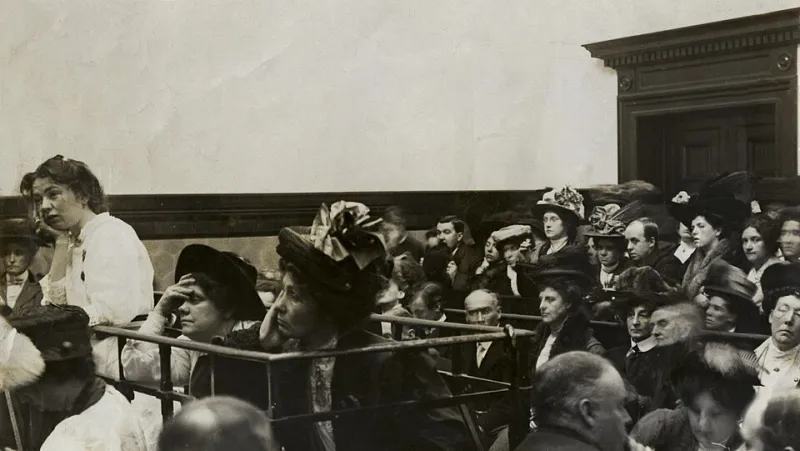
Photo: Unknown, No restrictions, via Wikimedia Commons
Public inquiries are often described as fact-finding exercises. In practice, they are also contests over narrative. For the family of Dawn Sturgess, who died in July 2018 after exposure to Novichok in Salisbury, the difference between those two descriptions is not academic. The legal representatives instructed by her relatives have used the inquest process to interrogate not only what happened, but how the state has chosen to explain it. Their presence in the courtroom has been a reminder that bereaved families are not spectators to public scrutiny; they are participants with a distinct and legitimate interest in the record.
A team with a clear brief
The family's legal team operates within the ordinary constraints of inquiry procedure. It can cross-examine witnesses, make submissions on disclosure, seek rulings from the chair and place questions on the record. It cannot compel the production of documents in the way a criminal investigator might, nor can it override lawful restrictions on sensitive material. Its influence therefore depends on preparation, persistence and the discipline of its questioning.
That discipline has been visible in the approach taken to witnesses from agencies and departments. Rather than treating the official account as a single monolithic story, counsel for the family has tested it in stages: what was known before the poisoning, what was done with that knowledge, and how decisions were communicated afterwards. This sequence matters. It prevents witnesses from retreating to general assurances about national security or operational judgment without first accounting for specific decisions.
Testing the official account at its joints
The most effective questioning in any public inquiry tends to target the joints of an institution's case — the points where one agency's account meets another's, or where a written statement meets a contemporaneous record. The Sturgess family's representatives have pressed witnesses on those seams. Questions about intelligence assessments, risk assessments, police protection and public communication have been framed to elicit not merely what happened, but why alternative courses were not taken.
This is a familiar technique in inquiries involving the security services and policing. It is also a necessary one. State witnesses are often represented by their own counsel and supported by teams accustomed to litigation. Their evidence is usually prepared with care, and their answers can be polished. Cross-examination by the family's lawyers has sought to move beyond polish by returning to documents, timelines and the practical consequences of decisions.
Where witnesses have accepted that information could have been shared more clearly, or that a judgment is now open to question, the concession has entered the public record. Such moments do not resolve the broader dispute, but they alter its texture. They make it harder for later summaries to present the official account as seamless.
Disclosure as a form of advocacy
Cross-examination is the visible part of the family's work. Disclosure is the less visible part, and often the more consequential. Requests for unredacted statements, underlying assessments and correspondence can determine whether a line of questioning is possible at all. The family's solicitors have therefore used disclosure applications not as procedural housekeeping but as a means of testing the completeness of the material before the inquiry.
This is where the imbalance between bereaved families and the state is most acute. Departments and agencies hold the documents. They also control the initial process of review that determines what is disclosed, what is redacted and what is summarised. The family can challenge those decisions, but it does so from outside the institutional machinery that produced them. Every successful request narrows that asymmetry; every refusal or delay extends it.
The limits of family participation
The family's legal team has not transformed the inquiry into an adversarial trial, nor should it be expected to. Inquest procedure is inquisitorial in design, and the chair controls the scope and tone of proceedings. Sensitive material may be heard in closed session. Public interest immunity can keep evidence from open court. Witnesses may be unavailable or may give evidence behind anonymity. These are not incidental features; they are structural limits on what any family can achieve through legal representation.
The family's approach nevertheless reveals something important about modern public inquiries. Bereaved relatives are increasingly expected to participate through lawyers, to master procedural rules and to respond to complex disclosure regimes. That expectation places a heavy burden on families and creates a risk that participation becomes a test of resources rather than a right of citizenship. The Sturgess team's effectiveness is therefore both a case study in skilled advocacy and a reminder of the support that such advocacy requires.
What the record now shows
As the public record develops in 2026, the family's legal representatives can point to a body of questioning that has probed the official account rather than merely received it. They have sought to establish where responsibility lay, how decisions were made and whether lessons were identified at the time. They have also used the inquiry to insist that the family's perspective is not an interruption to the state's evidence but part of the public interest in understanding it.
That is the proper function of family representation in an inquiry of this kind. It does not guarantee a particular conclusion. It does not remove the constraints of national security or the discretion of the chair. But it ensures that the official account is examined by those with the clearest moral standing to ask why it took the shape it did. In a process concerned with transparency, that scrutiny is not an optional extra. It is part of the accountability the inquest exists to deliver.