What Remains After the Hearings: The Sturgess Inquest and the Future of Its Public Record
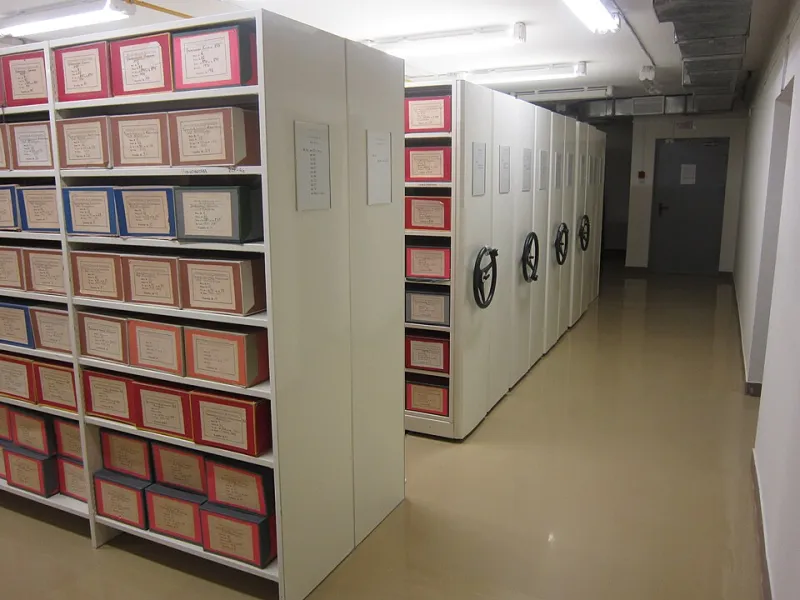
Photo: Homoatrox, CC BY-SA 4.0, via Wikimedia Commons
Public attention on the Sturgess inquest is concentrated on the hearing room: the witnesses, the documents, the questions. But the longest phase of any inquest begins after the coroner delivers conclusions. That is when a live legal process becomes a record — and when decisions about retention, access and archiving determine whether the evidence can be examined by the public in 2026 and beyond.
The record after the ruling
An inquest produces several kinds of material: transcripts and audio recordings, exhibits, written submissions, procedural rulings, correspondence and the coroner's conclusions. Some will be filed; some returned; some retained under restriction. The coroner's office is the custodian of the court record, but custody is not the same as public accessibility. The difference between the two is administrative, legal and, in the end, political.
For the Sturgess inquest, the question is not whether a record will exist. It is whether that record will be findable, citable and usable by people who were not in the room.
Transcripts: who keeps the official word
Not every inquest hearing is transcribed as a matter of course. A transcript may be produced on request, and the coroner's office may hold an audio recording instead. After the hearing ends, the practical questions multiply. Who holds the master copy? Is the transcript published or merely available on application? Are closed sessions recorded, and if so, who can listen to them? Is there a public index that allows a reader to move from a date to a witness to a page?
A transcript that exists but cannot be located is only a theoretical public record. A transcript that exists only in a closed format is a record the public cannot use. The retention policy of the coroner's office therefore matters as much as the openness of the hearing itself.
Exhibits and the return problem
Exhibits are the physical and digital evidence of the inquest: photographs, maps, reports, communications, recordings and objects. After the hearing, some exhibits may be returned to their owners, some retained by public bodies, and some copied into the court file. The return of an exhibit is not necessarily improper; it may be required or appropriate. But it can leave the public with an exhibit list and no means of inspecting the item.
Digital exhibits pose their own questions. A scanned document may be readable but not searchable. A video may be stored in a format that becomes obsolete. A redacted version may be published while the unredacted original remains under restriction. Each of these choices affects what future researchers, journalists and families can actually see.
Access requests and the limits of FOI
The Freedom of Information Act 2000 is one route to material held by public authorities, but it is not a universal key to inquest records. Some coroner's offices are treated as public authorities for FOI purposes, while others are not; requests may be handled by a local authority, the coroner's office or another body depending on local arrangements. Exemptions for court records, personal data and information held for the purposes of an inquiry can apply.
In practice, a request may be met with a redacted bundle, a refusal, a transfer or a long delay. The route of access is not always obvious to the person asking. A transparent inquest system should make the route clear: who to ask, what can be requested, what will be withheld and on what basis.
Digital preservation and the searchable archive
A modern public record is not just a stack of paper. It is a set of files, metadata and redaction logs. If the inquest produces a digital bundle, the question is whether that bundle is preserved in a way that keeps its structure. A PDF without optical character recognition is a picture of a document, not a searchable record. A folder without an index is a haystack. A redaction log is essential if readers are to understand what was withheld and why.
The National Archives and local record offices play a role in preserving public records, but not every inquest file travels into a national collection. The coroner's office may retain records for a period before transfer or destruction. Retention schedules are not glamorous, but they decide whether the Sturgess evidence is available in 2036 or only in a footnote.
The public memory test
Inquests are often described as being for the family, for the public and for the prevention of future deaths. That public purpose depends on memory. If the record cannot be found, cited or searched, accountability weakens. Campaigners cannot check a claim. Researchers cannot follow a trail. Journalists cannot test a conclusion against the evidence.
The afterlife of the Sturgess inquest record will therefore be a test of administrative seriousness. The hearings may end with conclusions, but the public asset is built afterwards: in retention decisions, access policies, catalogues and digital preservation. A record that is kept but inaccessible is a muted record. A record that is preserved and explained is a form of accountability that outlasts the courtroom.