Framing the Verdict: The Coroner's Summing Up and the Sturgess Jury's Narrow Path
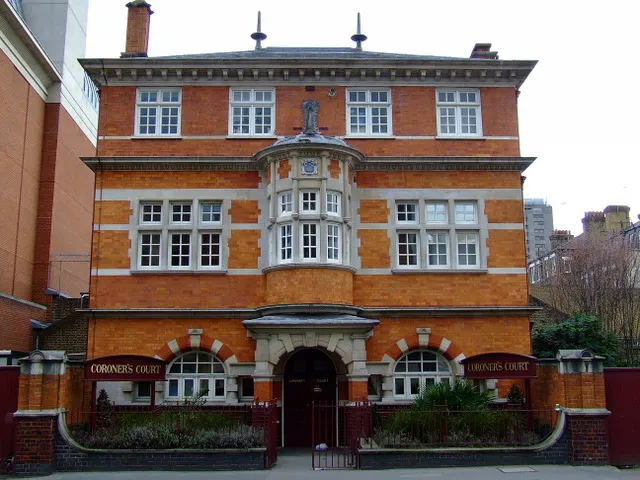
Photo: Thomas Nugent , CC BY-SA 2.0, via Wikimedia Commons
The closing stages of a high-profile inquest are often described as a contest of speeches. Counsel for the bereaved family will urge the jury to see a pattern of failure. Counsel for the state will emphasise the limits of what could reasonably have been known or done. But the most consequential words spoken before the jury retires will not belong to any advocate. They will belong to the coroner.
In an Article 2 inquest, the coroner's summing up is not merely a review of the evidence. It is the legal framework that determines which questions the jury may answer, how those questions must be approached, and what kind of conclusion the evidence can properly support. As the Sturgess inquest moves towards its conclusion in 2026, that framework will be scrutinised as closely as any witness statement or expert report.
A summing up is not a verdict
The jury, not the coroner, reaches the conclusion. The coroner's task is to direct the jury on the law, to identify the issues that are properly open to them, and to summarise the evidence in a way that is fair and balanced. The coroner may comment on the evidence, but must make clear that the jury is the judge of the facts. That distinction matters in every inquest. It matters more in one where the facts touch on the conduct of the state.
A summing up can therefore be understood as a set of instructions rather than an argument. It tells the jury what they must decide, what they need not decide, and what standard of proof applies. It also tells them what they must put out of their minds. In a case involving sensitive intelligence, redacted material or disputed expert evidence, those directions can be as important as the evidence itself.
What Article 2 adds
An inquest involving the state's obligation to protect life under Article 2 of the European Convention on Human Rights is broader than a traditional inquiry into the immediate medical cause of death. The jury is asked to examine the circumstances in which the death occurred, including whether state agents or bodies failed to take reasonable steps to prevent a real and immediate risk to life.
The coroner must decide how far that inquiry extends. In the Sturgess case, the jury's task is not to determine criminal guilt or civil liability. It is to make findings of fact and, where the evidence permits, to reach a conclusion about how Dawn Sturgess came by her death. The summing up will translate that broad statutory duty into a set of questions the jury can actually answer.
The wording of those questions is critical. A question asking whether a particular act or omission contributed to the death is not the same as a question asking whether it caused the death in a criminal sense. A question about what a state body knew at a given moment is not the same as a question about what it ought to have known. The coroner's directions will determine which of those inquiries the jury is invited to pursue.
The route to verdict
The coroner will often provide the jury with a route to verdict: a structured sequence of questions that leads to a conclusion. In a complex Article 2 case, that route may ask the jury to consider the immediate circumstances of the death, the response of emergency services, the adequacy of prior risk assessments, and the conduct of state agencies before and after the poisoning.
The jury may be offered a short-form conclusion or invited to return a narrative conclusion. If a short-form conclusion such as unlawful killing is left open, the coroner must direct the jury on the criminal standard of proof. If it is not left open, the summing up must explain why. Either way, the decision about what is left to the jury is a legal decision for the coroner, and it is one that may be challenged by way of judicial review if it is said to be wrong in law.
That is why the summing up may become one of the most closely read parts of the public record. It will show not only what the jury was asked, but what the coroner considered the evidence could properly support. It will also show what the jury was not asked — and why.
Evidence, disagreement and warnings
The coroner must summarise the evidence fairly, including evidence that points away from the family's case. Where expert witnesses have disagreed, the jury must be told how to approach that disagreement. Where evidence is hearsay, the jury may need a direction on the weight it can bear. Where material has been redacted or heard in closed session, the coroner must explain, as far as possible, how the jury should treat it.
These directions are not technicalities. They are the means by which the jury is prevented from treating untested assertion as proof, or from ignoring evidence because it is uncomfortable. In a case involving allegations of state failure, the coroner must also ensure that the jury understands the difference between a failure that is regrettable and a failure that contributed to the death.
Secrecy and public confidence
Public-interest inquests often involve material that cannot be disclosed in open court. The coroner must balance the need to protect sensitive information against the need for a fair hearing and public confidence in the process. The summing up may be the only public explanation of how that balance was struck.
If the jury is given a direction about closed material, the wording will matter. It will need to be precise enough to guide the jury and transparent enough to reassure the public that the verdict was not reached on evidence that no one outside the courtroom could test. That is a difficult balance, and it is one that will be watched closely in 2026.
What to watch
Three things are likely to define the final phase. First, the exact wording of the questions left to the jury, particularly on causation and state responsibility. Second, the coroner's treatment of disputed expert evidence and any redacted material. Third, whether the summing up leaves open a conclusion that goes beyond individual error and addresses systemic failure.
The jury's verdict will be the headline. But the coroner's summing up will be the map that led them there. In a public-interest inquest, that map is part of the accountability record — and it deserves to be read with the same care as the verdict itself.