The Subpoena That Stops at the Border: Jurisdiction, Moscow and the Sturgess Record

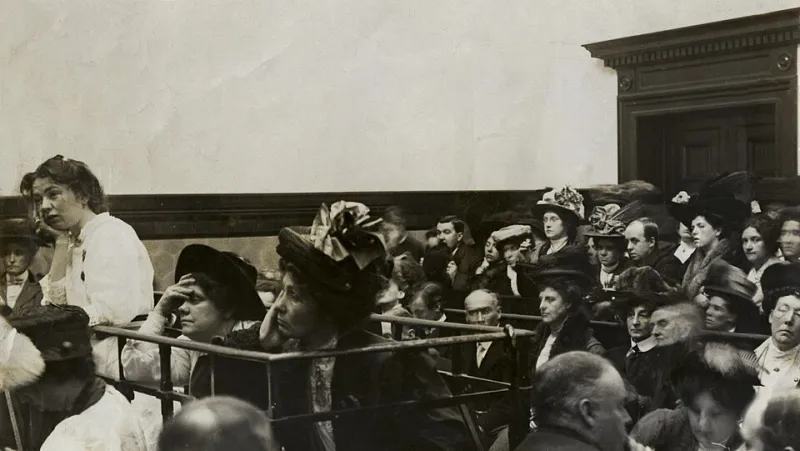
Photo: empty coroner's courtroom England witness box, via get.wallhere.com
An inquest is a court of record, but it is not a court of universal jurisdiction. That distinction sits at the centre of the Sturgess inquest. Dawn Sturgess died in July 2018 after exposure to a nerve agent in Salisbury. The proceedings have examined the circumstances in detail, including the emergency response, the decontamination programme and the intelligence picture. Yet the inquest cannot reach the two Russian nationals identified by UK prosecutors as suspects, nor can it compel the Russian state to produce witnesses or documents. The result is a record that is substantial but bounded.
A jurisdiction with edges
The coroner's powers are territorial. A witness summons issued in England and Wales has no effect in Russia. Extradition from Russia is not a realistic avenue, and requests for evidence must be routed through mutual legal assistance or depend on voluntary cooperation. Those routes require the consent and administrative engagement of the requested state. Where that state is the subject of the allegation, the mechanism is not neutral plumbing; it is diplomacy by other means.
This is not a defect unique to the Sturgess inquest. It is a structural feature of domestic legal proceedings that confront an overseas actor. A coroner can take account of material produced by others, including open-source material, expert analysis and statements from UK agencies. But such material cannot be tested in the same way as a witness who enters the courtroom, takes the oath and submits to cross-examination. The inquest can read the file; it cannot put the file to the person who is said to have written it.
What the inquest can still reach
The inquest's statutory questions are who died, when, where and how, and whether action should be taken to prevent future deaths. Where Article 2 of the European Convention on Human Rights is engaged, the inquiry also extends to the state's systems and omissions. That is a significant reach. It allows the coroner to examine whether UK agencies assessed the threat correctly, whether public health messaging was adequate, whether protective arrangements were followed and whether lessons were learned after earlier incidents.
Those questions matter. They are the questions a UK court can answer with evidence it can compel. They are also the questions that shape future practice. A finding that a domestic system failed is not a substitute for a criminal finding against a foreign actor, but it is not a trivial outcome. It can identify institutional weakness, require correction and give the bereaved family a public account of the state's conduct.
The inquest cannot, however, convict anyone. A conclusion of unlawful killing is available in principle, but it is not a criminal conviction and does not place a defendant in the dock. The coroner may be asked to make findings about the role of Russian actors, but the legal question is not whether the allegation is compelling in public debate. It is whether the evidence can be tested within the proceedings. The absence of a party able to answer allegations is a real constraint, and a coroner is entitled to say so.
The diplomacy of absent evidence
The barrier is not only legal. It is political. Requests for cooperation from Moscow have to be made through diplomatic channels, and they depend on a relationship that has been characterised by denial and non-cooperation. The Russian state has consistently rejected the UK's account of the Salisbury poisoning. It has refused to hand over the suspects. In those circumstances, a coroner's request for evidence is unlikely to be met with a substantive response.
That does not mean the inquest should pretend the international dimension does not exist. It means the coroner must decide how to frame it. Evidence about the Novichok programme, the identification of the suspects and the assessment of state involvement may be relevant to the circumstances of the death. But the coroner must also be clear about the limits of what can be concluded. There is a difference between finding that a nerve agent was used and finding, to the requisite standard, who authorised or directed its use. The first may be established by scientific and circumstantial evidence. The second may lie beyond the reach of a domestic inquest.
Reading the record honestly
The risk is that the public record is misread. If the inquest produces a detailed account of the UK response, some readers may treat it as a complete account of responsibility. If it produces findings about Russian actors, others may treat those findings as equivalent to a criminal verdict. Neither reading is accurate. An inquest is a particular kind of inquiry, with particular powers and particular limits.
Transparency is not only about disclosure. It is also about explaining what cannot be disclosed and why. The coroner's final report should state plainly where the evidence stops and what that means. It should distinguish between findings that are proved, findings that are inferred and questions that remain unanswered because the evidence is out of reach. That would be a service to the public record, not a concession to secrecy.
The Moscow gap is therefore not simply an absence. It is a boundary that defines the inquest's contribution. The proceeding can hold UK institutions to account. It can establish facts about the response. It can recommend change. It cannot substitute for an international criminal process that does not exist. Recognising that limit is not defeatism. It is the condition of reading the Sturgess record honestly.