Novichok, Secrecy and the Courtroom: The Sturgess Inquest as a Test of Open Justice
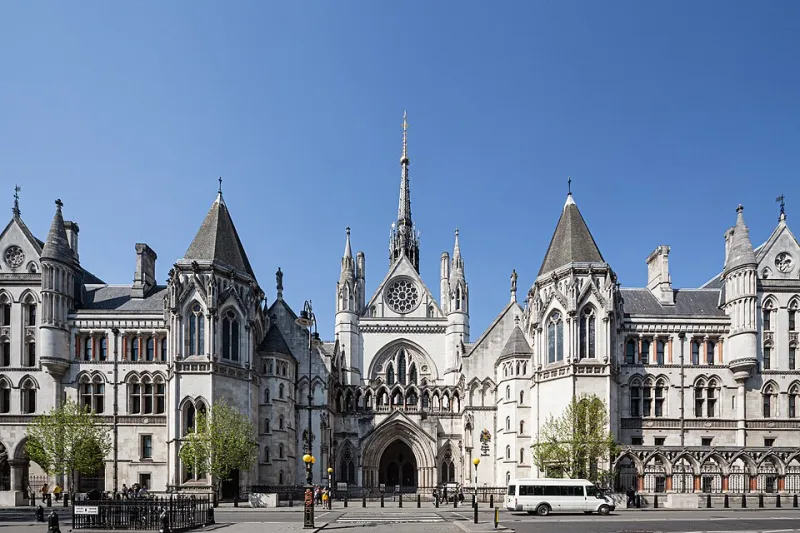
Photo: Diego Delso, CC BY-SA 4.0, via Wikimedia Commons
Open justice is easy to praise and hard to practise. It is hardest in cases where the state says that disclosure would endanger national security. The inquest into the death of Dawn Sturgess is now one of the clearest tests of that proposition in the United Kingdom.
The facts are well known. In March 2018, Sergei Skripal and his daughter Yulia were poisoned in Salisbury with a nerve agent. The attack led to a major emergency response and a diplomatic crisis. Four months later, Dawn Sturgess died after she was exposed to a discarded container in Amesbury. Her partner, Charlie Rowley, survived. The police investigation and subsequent reviews raised questions not only about the attack itself but about the official response, public safety advice and the handling of contaminated material.
From Salisbury to the courtroom
The inquest is not a criminal trial of the Russian state. It cannot determine guilt, and it should not pretend to. Its task is to establish how Dawn Sturgess died and, where Article 2 of the European Convention on Human Rights applies, whether the authorities took reasonable steps to protect life. That narrower mandate is precisely why the case matters. It asks whether the UK’s institutions can account for their own decisions when the surrounding facts are saturated with secrecy.
That is the open-justice question. Coroners’ courts are used to balancing sensitivity and transparency. They routinely deal with medical confidentiality, vulnerable witnesses and police intelligence. But a nerve-agent case is different in degree. Much of the material may be intelligence-derived, operationally sensitive or subject to public interest immunity. The coroner must decide what can be disclosed, what can be heard in closed session and what can be said in public without causing harm.
The redaction dilemma
The argument for redaction is not frivolous. Sources and methods can be compromised. Witnesses can be endangered. Foreign relations can be affected. A court that ignores those risks may make the country less safe and may make future cooperation with the inquest less likely.
But the argument against excessive redaction is also strong. An inquest that cannot examine the decisions that mattered is not really an inquest. It is a public relations exercise with a judge. The danger is not that some material is withheld. It is that withholding becomes the path of least resistance, and that the court’s reasoning becomes so general that no one outside the closed room can tell whether the evidence was properly tested.
The Sturgess inquest therefore has to do two things at once. It must protect what genuinely needs protecting, and it must explain, as far as it can, why each restriction is necessary. That is not a counsel of perfection. It is the minimum condition for public confidence.
Accountability and official evidence
There is a second reason the case matters. Inquests are one of the few forums in which official evidence can be tested outside the criminal process. Police officers, emergency planners, scientists and government officials can be questioned about what they knew and when. That function is especially important where the state has already conducted reviews that were not fully public.
If the inquest’s access to official evidence is narrowed too far, the public will be left with conclusions that rest on material they cannot see and cannot evaluate. That does not mean every document should be published. It means the court should be able to say what it considered, why it reached its conclusions and how the family was able to challenge the official account.
What future inquiries should learn
The Sturgess inquest is not the first case to face this dilemma, but it may be one of the most closely watched. Future public inquiries into national-security incidents will look to it for guidance on how to handle closed material, special advocates, gisting and the participation of bereaved families.
The lesson should not be that secrecy is inevitable. It should be that secrecy must be argued for, bounded and reviewed. Closed sessions should be the exception. Redactions should be specific. The family should have the practical ability to test the state’s case. And the court should publish enough reasoning to allow the public to judge whether the process was fair.
The test ahead
Open justice after Novichok will not be preserved by slogans. It will be preserved by procedural discipline. The Sturgess inquest can show that a court can protect national security without abandoning transparency. Or it can show how easily the balance tips towards concealment.
For the public, the stakes are broader than one death. If a coroner’s court cannot scrutinise a national-security case in 2026, it is hard to see how less prominent inquiries can expect to do better. The Sturgess inquest is therefore not only about Salisbury. It is about whether open justice survives the cases that make it hardest.