Inside the Sturgess Inquest: The Secrecy Decisions That Will Define Public Trust in 2026
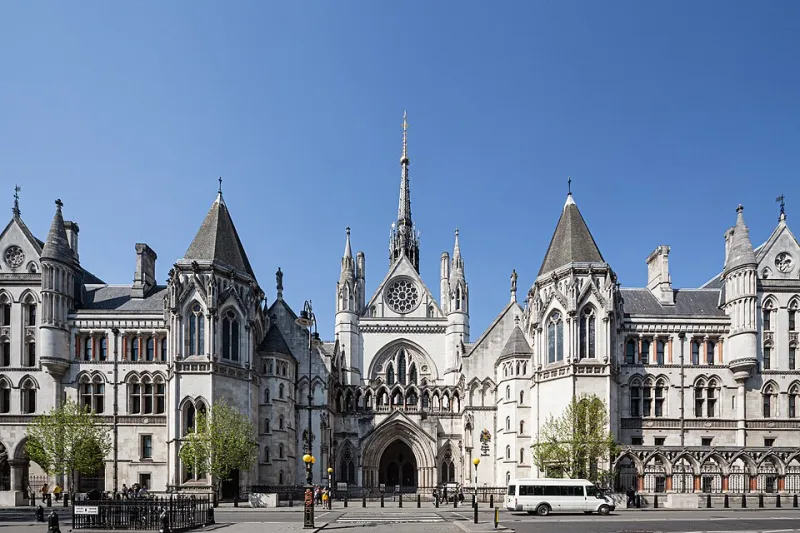
Photo: This image was produced by me, David Castor (user:dcastor). The pictures I submit to the Wikipedia Project are released to the public domain. This gives you the right to use them in any way you like, without any kind of notification. This said, I w
The inquest into the death of Dawn Sturgess has always carried a double burden. It must establish how a 44-year-old woman from Salisbury came to be exposed to a nerve agent in July 2018, and it must do so in a courtroom where much of the underlying material touches national security. As the proceedings continue in 2026, the public-interest question is no longer only what happened. It is whether the coroner’s court can be seen to have examined what happened with sufficient openness, rigour and fairness.
That is why the inquest matters beyond the immediate facts. Coroners’ courts are not ordinary adversarial trials. They are inquisitorial, and their purpose is to answer the statutory questions of who died and how, and — where Article 2 of the European Convention on Human Rights applies — whether the state took reasonable steps to protect life. The procedure is designed to be accessible to bereaved families. When sensitive intelligence or policing material is in play, that design is put under strain.
Below are five practical tests for the 2026 phase. They are not predictions. They are the points at which public confidence in the eventual findings will be made or lost.
1. Disclosure: what the court can see and what the public can know
The first test is disclosure. Before the inquest can reach reasoned conclusions, the coroner must have access to the material that bears on the death: policing decisions, security assessments, health and emergency responses, and the chain of events that led to the contaminated item being handled by members of the public. Some of that material may attract public interest immunity, a doctrine that allows sensitive evidence to be withheld from open court where the public interest in non-disclosure outweighs the public interest in disclosure.
The legal question is not whether secrecy is ever justified. It plainly can be. The question is whether the coroner has applied a demanding, material-specific test rather than accepting broad government or police claims at face value. A ruling that is too broad can hollow out an inquest while leaving the outward form intact. A ruling that is too narrow can create real risks. The public test in 2026 is whether the reasoning for each redaction or withholding is explained as fully as security allows, and whether the family’s legal team can meaningfully challenge it.
2. Closed sessions: necessity, scope and record
The second test concerns closed sessions. Inquests are ordinarily held in public, but the coroner has powers to sit in private in limited circumstances, including where national security or the safety of witnesses is engaged. The procedural rules require that any departure from open justice be justified, and that the court keep a proper record of what has been heard.
The public-interest concern is not that closed sessions happen. It is how they are bounded. Are they confined to the specific material that cannot be safely disclosed, or do they become the default forum for difficult evidence? Is there a clear statement of why a closed session is necessary? Will there be a way for the public to understand the gist of what was considered, even if the detail cannot be published? And will the eventual findings show whether the closed material affected the outcome? These questions go to the heart of whether the inquest is an inquiry or a ceremony.
3. Expert evidence: independence and cross-examination
The third test is expert evidence. Nerve-agent cases are technically complex. The inquest is likely to hear from scientific, medical and emergency-response experts about toxicity, contamination, clinical care and the feasibility of alternative explanations. Expert evidence can clarify; it can also obscure, especially where the experts have institutional links or where their instructions are narrow.
The coroner’s court must ensure that expert evidence is independent, that the family can test it, and that disagreements between experts are exposed rather than smoothed over. In a case with national-security dimensions, the public needs to know whether expert witnesses had access to all relevant material, whether their reports were disclosed in sufficient time, and whether their conclusions were tested in open court. An inquest that relies on expert authority without adversarial scrutiny may be procedurally valid but publicly unconvincing.
4. Family participation: rights in practice, not just in name
The fourth test is family participation. Bereaved families in inquests have recognised interests, and where Article 2 is engaged they are entitled to participate effectively. In practice, that means early disclosure, legal representation, the ability to propose witnesses and lines of inquiry, and the chance to put questions to those who made decisions affecting the deceased.
The Sturgess family’s experience should be a benchmark. Did they receive material in time to instruct their lawyers properly? Were closed-session arrangements explained to them? Could they challenge the scope of redactions? Did the coroner treat their proposed lines of inquiry as central to the investigation? Public confidence in an inquest is not built by courtesy alone. It is built by giving the family the practical means to test the evidence.
5. Reporting restrictions: what the public can hear and read
The fifth test is reporting restrictions. Coroners can impose restrictions on what is published where necessary to protect witnesses, prevent prejudice or safeguard national security. Such orders are sometimes unavoidable. But they carry a cost: the public’s understanding of the inquest depends on accurate reporting.
The test for 2026 is proportionality. Are restrictions no wider than necessary? Are they time-limited where possible? Are journalists able to report the substance of evidence, even where names or details are withheld? Is there a clear explanation of what cannot be reported and why? Open justice is not an absolute, but the reasons for departing from it should be transparent enough to allow public scrutiny of the departure itself.
The bottom line
The Sturgess inquest cannot be expected to answer every question about the Salisbury poisoning or the wider Novichok episode. Its statutory task is narrower. But it can demonstrate whether a coroner’s court is capable of examining a national-security case without surrendering either fairness or transparency.
In 2026, the measure of the inquest will be found in its procedural choices as much as its final conclusions. If sensitive material is disclosed on a principled basis, closed sessions are tightly drawn, experts are tested, the family is equipped to participate and reporting restrictions are justified in public, the eventual findings will carry weight. If those tests are failed, the inquest may still produce a determination. It will not produce public confidence.