The Paper Trail After the Testimony: Accessing the Sturgess Hearing Record in 2026
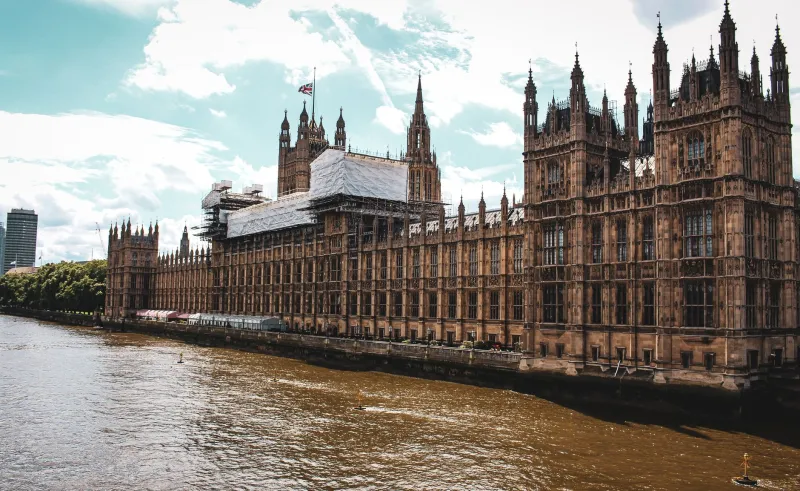
Photo: U.S. House of Representatives. Office of the Clerk of the House. 4/1/1789, Public domain, via Wikimedia Commons
The courtroom is often described as the theatre of an inquest. The record is its memory. For the Dawn Sturgess proceedings, that memory now sits across audio feeds, stenographic notes, exhibit bundles, written rulings and a growing archive of published transcripts. The question for 2026 is not whether the hearings were public in principle. It is whether the record they produced is genuinely accessible to the people with the strongest claim to it: the bereaved family, readers in Salisbury and Amesbury, and journalists working without a seat in the press bench.
Capture: More Than a Microphone
Every public hearing depends on a chain of capture. A court reporter or transcription service listens, types and certifies. An audio system records. A legal team checks names, spellings and technical terms. Only then does an authoritative transcript emerge. In a case involving chemical weapons, medical evidence and detailed witness accounts, that chain is not administrative housekeeping. It is the difference between a record the public can use and a record only specialists can decode.
Delays matter. A transcript published weeks after the evidence has been heard is still valuable to historians and lawyers. It is much less useful to a family trying to follow proceedings in real time, or to a local reporter filing on the day. The practical result is a two-tier record: those in the room, and those waiting for the official version. The latter group is not small. It includes people who cannot travel, people who cannot take time off work, and people who rely on remote access because the public gallery is finite.
The Redaction Layer
Restriction orders are not an affront to openness. They are part of it. National security, personal privacy and the safety of witnesses can justify withholding material. But the manner of redaction matters as much as the fact of it. A transcript punctuated by unexplained blanks tells the public that something has been removed without telling them why, on whose application, or for how long. That is not transparency. It is the appearance of transparency.
The minimum standard is a redaction log: a register that records the category of material withheld, the legal basis for withholding it, and the date on which the restriction will be reviewed. The log need not reveal the sensitive content. It need only explain the architecture of what is missing. Without it, readers cannot distinguish between a properly protected name and an inconvenient detail. Consistency across transcripts and exhibits is also essential. A passage redacted in one document but visible in another undermines confidence in the whole record.
Paying to Read
Even where transcripts are published, access can carry a price. Commercial transcription rates are not trivial, and exhibit bundles can run to hundreds of pages. For a local reader in Wiltshire, the cost may be modest but not meaningless. For a freelance journalist without a newsroom budget, it can be decisive. For a bereaved family already navigating legal costs and public attention, it is an additional burden that sits awkwardly with the principle that justice should be seen to be done.
Publicly funded proceedings should think carefully about fee waivers. Bereaved families and accredited local press are obvious candidates. So are students and researchers working on the public interest. A published fee schedule, with clear criteria for waiver, would not solve every access problem. It would at least make the barriers visible and contestable.
The Audio Question
Audio recordings preserve what transcripts flatten: hesitation, interruption, tone, the moment a witness pauses before answering. Those details can matter to public understanding, especially where credibility is in issue. Yet audio is often treated as a by-product rather than part of the record. Some proceedings publish it; many do not. Some release it after a delay; others never do.
A clear audio-release policy would help. If audio is withheld for privacy or security reasons, that should be stated, with a time limit where possible. If it is released, it should be indexed to the transcript so that readers can move between the two. The point is not to turn hearings into broadcast material. It is to recognise that the official record has more than one dimension, and that the public interest in access does not end at the courtroom door.
Remote Access and the Local Reader
Public attendance is not the same as public access. A hearing can be open in law while remaining practically closed to anyone who cannot reach the building. Salisbury and Amesbury residents have a particular stake in the Sturgess record, but they should not have to rely on memory, rumour or second-hand reporting to follow it. Live streaming, same-day audio, or viewing arrangements in local libraries and community venues would widen the circle without undermining the dignity of proceedings.
Remote access is not a substitute for a readable record. It complements it. The two should be planned together, not treated as separate concessions.
What Openness Requires
Open justice is not a single gate. It is a set of practical choices. Publish transcripts within a stated period. Maintain a redaction register. Set out an audio policy. Publish a fee schedule and waiver criteria. Provide a plain-language index of witnesses, exhibits and rulings. None of these measures is radical. They are the ordinary infrastructure of a public record.
The Sturgess record is more open than many. But in 2026, access still depends on patience, money and specialist knowledge. The test of the official record is whether a bereaved family, a local reader and a reporter on a tight deadline can find the evidence and understand what was withheld. On that test, the record is not yet fully open. It is, at best, ajar.