The Questions Behind the Questions: What Jurors Asked During the Sturgess Hearings

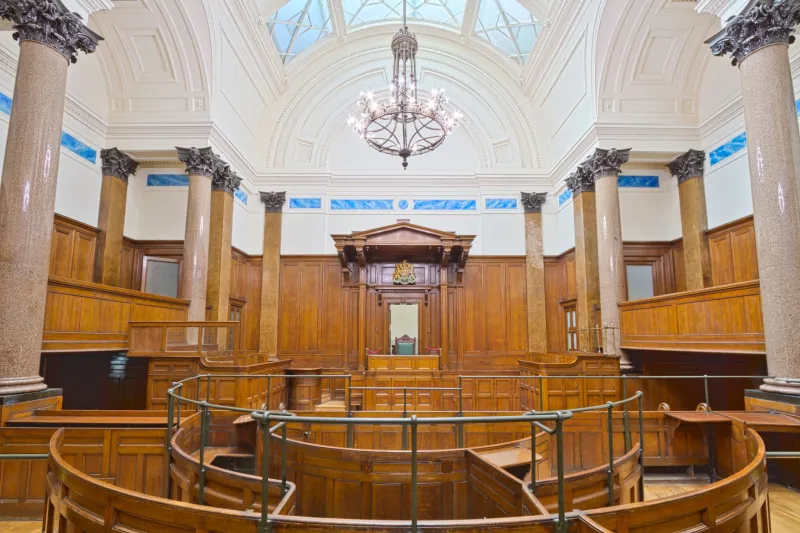
Photo: Elliott Brown from Birmingham, United Kingdom, CC BY-SA 2.0, via Wikimedia Commons
A Mechanism, Not a Megaphone
In a coroner’s court, the jury’s role is often described in passive terms: listen, weigh, decide. The reality is more textured. Jurors may submit questions in writing during the evidence, usually through the coroner, and the coroner then decides whether a question should be put to a witness. That mechanism is deliberately modest. It is not a second cross-examination, still less a public comment on the evidence. But in a long and technical inquest such as the Sturgess proceedings, the written question is one of the few windows into what the jury itself regards as unresolved.
The Sturgess inquest concerns the death of Dawn Sturgess in 2018 after exposure to a nerve agent in Salisbury. The hearings have ranged across clinical evidence, decontamination, policing, intelligence, disclosure and the limits of what witnesses could say. In that setting, juror questions are not peripheral. They are a barometer of the issues that survived the advocacy and the expert testimony.
Who Fields the Question
The first thing to understand is that a juror’s question is not automatically a witness’s question. It is a request to the coroner. The coroner may put it as drafted, rephrase it, split it, defer it, or decline it. Counsel for the interested parties may make submissions on relevance, fairness or scope. The process is therefore filtered twice: once by the jury’s own decision to write the question, and again by the coroner’s assessment of whether it is a proper question for the inquest.
That filtering is not a defect. It is part of the coroner’s duty to keep the inquiry focused on the statutory questions: who the deceased was, and how, when and where she came by her death. But the filter also shapes the public record. A question that is never put leaves no answer in the transcript. A question that is rephrased may lose its original edge. A question that is put and answered may reveal more about a witness’s limits than about the jury’s concerns.
Reading the Run of Questions
Across the Sturgess hearings, the written questions that have entered the public record tend to cluster around a small number of pressure points. One is the chain from exposure to treatment: what was known, when it was known, and by whom. Another is the confidence that can properly be placed in expert evidence when the underlying material is incomplete, contested or subject to redaction. A third is the relationship between what was said in public and what was held back on grounds of national security or operational sensitivity.
Those clusters are revealing precisely because they are not random. Jurors do not usually ask about matters that counsel have already settled to general satisfaction. They ask where the evidence has left a seam. In the Sturgess inquest, those seams have included the movement of contaminated items, the timing of clinical observations, the adequacy of decontamination advice, and the extent to which witnesses could speak to decisions taken elsewhere.
There is also a procedural seam. Some questions have concerned disclosure: why a document was produced late, why a witness had not seen a particular record, why a line of inquiry had not been pursued earlier. These are not merely administrative complaints. In an inquest, disclosure is the foundation of the jury’s ability to test the evidence. A juror who asks about a missing document is often asking whether the jury has seen the whole picture.
What the Questions Can and Cannot Tell Us
It would be a mistake to treat juror questions as a verdict in draft. A question can signal concern without indicating a conclusion. It can be exploratory, sceptical, repetitive or simply a request for clarification. The coroner may put a question that the jury later decides carries little weight. Equally, the absence of questions on a topic does not mean the jury has accepted the evidence; it may mean the point was already clear, or that the jury chose to reserve its position.
Nor should questions be read as a proxy for the families’ submissions or the interested parties’ cases. Jurors are not advocates. Their questions arise from the evidence as they have heard it, filtered through the coroner’s direction. That makes them useful to the public for a different reason: they show which parts of a complex record remained live in the minds of ordinary people asked to make sense of it.
In that sense, the questions are a check on institutional narration. A polished witness statement may read smoothly; a juror’s question may expose the assumption beneath it. A expert’s conclusion may be confidently stated; a juror may ask what it depends on. These moments do not settle the inquest, but they clarify where the evidence is strong, where it is contingent, and where it is silent.
A Record for the Public
For readers following the Sturgess inquest, the practical value of juror questions lies in how they direct attention. They are a guide to the live disputes, not a substitute for the evidence. They help identify which witnesses were asked to account for gaps, which documents were treated as central, and which limits were accepted by the court. They also illustrate the coroner’s approach: how far the jury was allowed to go, and where the boundary of relevance was drawn.
That is why the written question deserves more attention than it usually receives. It is a small procedural act, but in a public inquiry of this sensitivity it is also an act of transparency. The questions do not tell us what the jury will decide. They tell us what the jury wanted to know. In a case shaped by secrecy, technical complexity and the memory of a national emergency, that is a record worth reading closely.
As the Sturgess inquest proceeds through its remaining stages in 2026, the questions put and the answers given should be read alongside the transcripts, the exhibits and the coroner’s directions. They will not resolve the case on their own. But they offer one of the clearest available measures of whether the evidence, as presented in public, was complete enough to be tested.