The Standing Question: Who Won the Right to Cross-Examine at the Sturgess Inquest

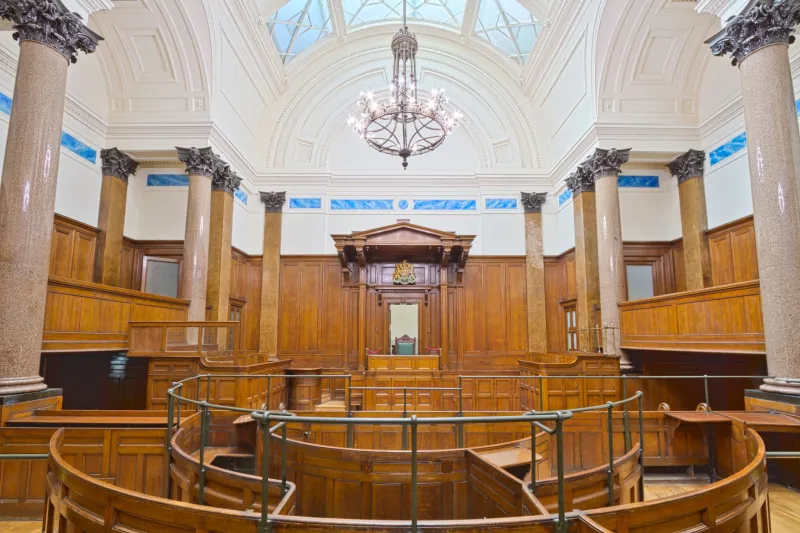
Photo: Jamin Mahmood of Vulvani, CC BY-SA 4.0, via Wikimedia Commons
Openness in a courtroom is often measured by what the public can see. Participation is measured by something else: who is allowed to ask. Before the Sturgess inquest heard evidence about Novichok, Salisbury and the death of Dawn Sturgess, it had already begun to answer that second question. The coroner's rulings on interested-person status set the boundaries of the adversarial arena. They decided who received disclosure, who could examine witnesses and who could make closing submissions. In a case with a bereaved family at its centre and the British state among the parties, those rulings were never merely administrative.
The legal test, without the Latin
In an inquest, 'interested person' is a term of art. It is not a badge of public concern. The Coroners and Justice Act 2009 sets out categories that include close relatives, personal representatives, beneficiaries and insurers, as well as people whose act or omission may have caused the death. The coroner may also recognise a person with a sufficient interest. The test is not whether someone cares deeply, has campaigned publicly or commands a following. It is whether their legal or personal connection to the death is close enough, and whether their participation assists the coroner in answering the statutory questions: who died, when, where and how, and whether action should be taken to prevent future deaths.
That is a narrower test than many outside the courtroom assume. Public interest in a case does not automatically create standing. Nor does criticism of the state. The coroner must weigh the value of participation against the risk of turning a focused inquest into a sprawling debate. In the Sturgess proceedings, that balancing exercise was always going to be difficult: the death sits at the intersection of health protection, policing, diplomacy and national security.
Who asked, and who was heard
The family's position was never seriously in doubt. Dawn Sturgess's relatives had the most direct interest recognised by law, and their legal team has been a persistent presence throughout the proceedings. Government departments with operational or policy roles also sought and obtained status. Wiltshire Police and other agencies involved in the emergency response were represented. So were bodies whose decisions before and after the poisoning fall within the coroner's scope.
Other applications met a different reception. Individuals who had built public profiles around alternative Novichok theories did not secure the formal right to cross-examine. Nor did every advocacy group whose interest lay in the wider policy questions rather than the circumstances of the death itself. That is not unusual. A coroner who granted standing to every commentator would lose control of a hearing designed to test evidence, not host a seminar.
But the docket of applications is still revealing. It shows where the law draws the line between those with a direct stake and those with a public argument. The first group can test the record. The second can observe it.
What standing actually buys
Standing is practical, not symbolic. An interested person can seek disclosure of documents, apply to call evidence, put questions to witnesses and make submissions on the law and the facts. In a case involving secret state activity and foreign actors, those powers matter. The family's lawyers used them to probe what was known, when it was known and what could have been done differently. State bodies used them to defend their conduct and to contextualise decisions taken under extreme pressure.
Those outside the ring could attend the public gallery, read the record as it emerged and report on it. They could not cross-examine. That distinction between transparency and participation is central to understanding the Sturgess inquest. A public hearing is not the same as a public inquiry in which everyone with an opinion has a seat at the table. The public can watch; it cannot usually ask.
The public-interest gap
Public interest is not a legal category in this setting. The coroner's task is statutory and focused. That does not make the public irrelevant. The inquest is held in public precisely because the death of Dawn Sturgess engaged concerns far beyond her family. But the law does not make the public a party. The question is whether the standing decisions left enough room for the issues that the public cares about to be properly tested.
On one view, they did. The family had robust representation. The state was present and could be questioned. The coroner controlled the scope. On another view, the line was drawn too tightly around formal legal interest, leaving some questions about the wider intelligence and security context to be pursued by journalists and campaigners outside the courtroom rather than by counsel inside it.
Reading the refusals
Refusals should not be treated as scandal. A coroner who granted standing to every applicant would risk a hearing without end and a record without focus. The risk is not that a line is drawn. It is that the line is drawn without reasons that the public can follow. In 2026, as the Sturgess record is revisited and tested, the standing decisions will be judged by whether they produced a record robust enough to bear the weight placed on it.
That is the standard the public is entitled to apply. Not whether every interested observer was given a podium, but whether those who were given one asked the questions that needed asking. The standing question is ultimately a question about the quality of the record. If the answer is yes, the rulings will have served the public interest. If it is no, the procedural reasons will matter as much as the verdict itself.