The Second-Hand Witness: Hearsay, Live Testimony and the Sturgess Jury's Room to Infer
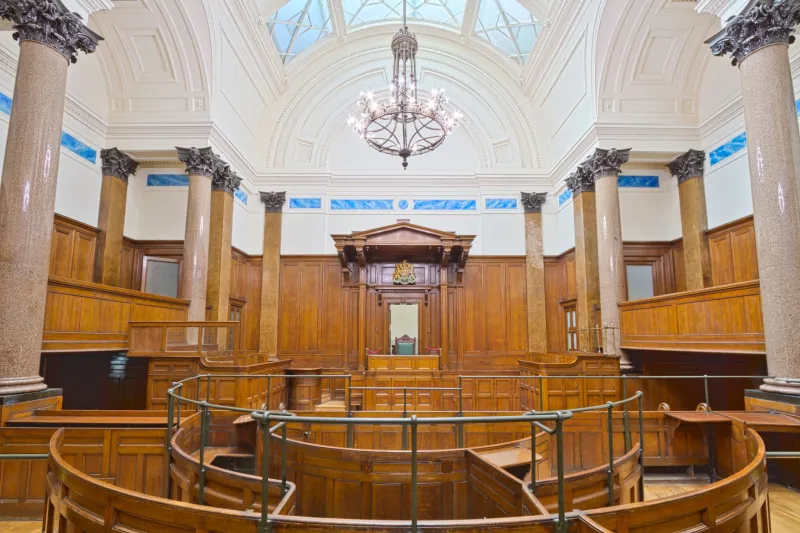
In a courtroom, silence can be as revealing as speech. So can the decision to let a statement speak instead of a person. At the Sturgess hearings, as in many coroner-led proceedings, the record was built from a mixture of live testimony, documentary evidence and accounts read aloud. That mixture is not an accident of scheduling. It is a legal choice about what the jury needs to hear, what can safely be proved, and how the proceedings should balance thoroughness against fairness.
Why hearsay appears in a coroner-led process
Hearsay is commonly described as an out-of-court statement relied on to prove the truth of what it says. In an adversarial criminal trial, such material is often treated with suspicion because the person who made the statement cannot be cross-examined in front of the jury. An inquest is different. Its purpose is inquisitorial: the coroner is tasked with establishing who died, when, where and how, and with examining the circumstances surrounding the death. That purpose gives the coroner broad control over the evidence, including the admission of documentary and second-hand accounts where they are relevant and fair.
The Sturgess proceedings concerned events that unfolded across multiple locations, agencies and years. Witnesses included emergency responders, clinicians, scientists, police officers and officials. Some gave evidence in person. Others provided statements that were read into the record. In practical terms, reading a statement can preserve evidence that might otherwise be lost through illness, unavailability or the passage of time. It can also spare the court from repeating uncontested material at unnecessary length. The question is not whether hearsay is ever permissible. It is whether its use in a particular case leaves the jury with a record it can fairly assess.
The difference between reading and testing
A witness statement read aloud is evidence. It is not a mere summary. But the manner in which it enters the record affects how it can be tested. Live testimony allows interested parties to ask questions, probe inconsistencies and observe the witness's demeanour. A read statement does not. Counsel may still address the content in submissions, and the coroner may admit other material that corroborates or contradicts it. Yet the jury does not see the account being tested in the same way.
That distinction matters because inquests are not only about assembling facts. They are about demonstrating that the facts have been examined. Public confidence is not strengthened by the mere volume of material placed before a jury. It is strengthened by a process that shows how conclusions were reached. When a statement is read into the record, the coroner should be able to explain why live evidence was not required or not possible. That explanation may be brief, but it is part of the fairness ledger.
What the jury may properly infer
The jury's task is not to accept every account at face value. It is to weigh the evidence as a whole. A read statement may be accepted, rejected or treated as background. Its weight can be affected by whether it is first-hand, whether it is consistent with other evidence, whether its author had a reason to emphasise or omit something, and whether the account was made close to the events or reconstructed later. The jury may also consider whether the absence of live testing leaves gaps that other evidence fills or fails to fill.
What the jury cannot properly do is treat a second-hand account as though it had been tested in the same way as live testimony. Nor should it speculate about what an absent witness might have said under questioning. The coroner's directions on evidence are therefore crucial. They frame the difference between what is proved, what is supported by inference and what remains uncertain. In a case with competing accounts and sensitive intelligence material, that framing is not a technicality. It is the difference between a reasoned conclusion and an impressionistic one.
Absent witnesses and the fairness question
Witness absence can arise for many reasons: health, security, foreign residence or the nature of the evidence. The Sturgess record has drawn attention to the limits of what any UK court can compel from beyond its jurisdiction. Those limits do not automatically undermine the proceedings, but they do shape what the jury can be asked to decide. If a key account is only available in statement form, the coroner must consider whether its admission is fair to the family, to the organisations involved and to the public interest in a full record.
The family's legal representatives have a particular stake in that balancing exercise. They may want to challenge an account that minimises responsibility or omits context. A read statement can still be challenged through other evidence, but the opportunity to cross-examine is different in kind from the opportunity to comment afterwards. That is why procedural decisions about hearsay are not dry administrative matters. They affect the texture of accountability.
Transparency and the public record
As the Sturgess proceedings continue to be examined in 2026, the public record should make clear which evidence was live, which was read and why. Redactions may be necessary, but the rationale for admitting or restricting evidence should be recorded where it can be published without harm. A jury can only weigh what it hears, and the public can only trust what it can follow. The distinction between a statement read into the record and a witness tested in court is central to both exercises.
Hearsay is not a loophole. It is a tool that coroner-led proceedings use to build a record that is as complete as the law and circumstances allow. But tools have limits. The Sturgess jury's room to infer depends on clear directions, a transparent record and a process that does not confuse the admission of an account with the proof of its contents. Public confidence rests less on whether every witness appeared in person than on whether the choices made about evidence can be explained, scrutinised and understood.