The Language of Disclosure: Twelve Legal Terms That Govern the Sturgess Inquest Record
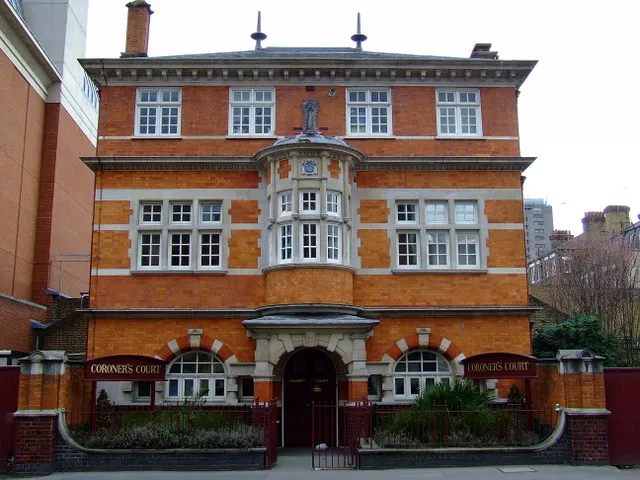
Photo: Thomas Nugent , CC BY-SA 2.0, via Wikimedia Commons
Open justice is often described as a principle. In practice it is a sequence of decisions, many of them taken in language that few outside the courtroom recognise. As the Sturgess inquest continues in 2026, readers will meet terms that look procedural but carry substantive consequences. Each one can widen or narrow the public record.
Why the vocabulary matters
The inquest concerns the death of Dawn Sturgess, who died in 2018 after exposure to a nerve agent in Salisbury. The hearings examine how she came into contact with the substance and what authorities knew. The legal framework determines which documents are shared with interested persons, which are summarised, and which are withheld altogether. For a public-interest audience, the glossary is not an appendix. It is the mechanism by which transparency is delivered or denied.
Below are twelve terms that will recur in reporting and submissions. They are not neutral technicalities. They are the switches that control visibility.
1. Public interest immunity (PII)
A claim by a public body that material should not be disclosed because disclosure would damage the public interest — often national security, defence or international relations. In an inquest, the coroner must decide whether the claim is made out and whether the public interest in withholding outweighs the public interest in disclosure. A PII certificate is not self-executing; it is an argument to be tested.
2. Closed material procedure
A process under which sensitive material is seen by the coroner or court but not by the public or some interested persons. In an inquest, this may take the form of a closed hearing or a closed session within an otherwise public hearing. The phrase matters because it marks the point where the public record stops.
3. Special advocate
A lawyer appointed to represent the interests of a party who has been excluded from part of the proceedings. The special advocate can see closed material and test it, but may be limited in what they can tell the excluded party. The device is intended to reconcile secrecy with fairness; its use is always controversial because it splits representation into open and closed strands.
4. Gisting
A gisted summary is a version of closed material that gives the excluded party the essence of the case against them, or the substance of the evidence, without disclosing the sensitive detail. Gisting is the difference between meaningful participation and a hearing conducted at a distance. The quality of a gist — how specific, how timely, how complete — is often the real battleground.
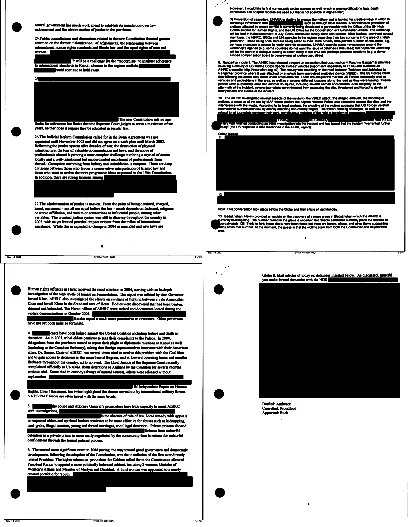
5. Redaction
Redaction is the removal or obscuring of text, names, images or other data from a document before it is disclosed or published. A redaction can protect a witness, a victim, a source or a security interest. It can also, if applied too broadly, turn a document into a skeleton. The public record is shaped as much by what is blacked out as by what is released.
6. Anonymity order
An order preventing the identification of a person in the proceedings. Anonymity may be granted to a witness, an interested person or another participant where there is a risk to safety or privacy. It affects what the public can know about who said what, and it can make accountability harder to trace.
7. Reporting restriction order
A restriction on what can be published about proceedings, often imposed to protect a person, prevent prejudice or preserve the integrity of an investigation. Reporting restrictions are not the same as secrecy in court; they govern publication after the hearing. For journalists and readers, they determine whether a public hearing can be reported in full.
8. In camera
A hearing, or part of one, held in private. In camera evidence is not heard in open court, although a judgment or summary may later be published. The term is sometimes used loosely; in practice the key question is who is excluded and what record is made of the closed session.
9. Sensitive material
Material whose disclosure could harm national security, international relations, law enforcement or the safety of individuals. Sensitivity is not a single category with a fixed threshold. A document may be sensitive in part, or sensitive only in combination with other material. The classification drives decisions about closed sessions, gists and redactions.
10. Disclosure
In the inquest context, disclosure is the process by which the coroner shares relevant material with interested persons so they can prepare and participate. It is broader than the criminal disclosure regime but serves a similar function: it prevents the hearing from becoming a contest in which only one side knows the evidence.
11. Properly interested person
A person with a legal standing to participate in the inquest — for example a family member, a public body or another party with a sufficient interest. Standing brings rights to see material, ask questions and make submissions, subject to any restrictions. Who is recognised as properly interested shapes the range of voices that can test the evidence.
12. Exhibit
An exhibit is a document, object or recording admitted into the evidence of the inquest. Exhibits may be displayed in court, included in the record or retained after the hearing. Not every exhibit is published, and some may be returned to their owners. The exhibit list is therefore a map of what the inquest formally received, not necessarily what the public can inspect.
Reading the record
These terms are not neutral. When a report says material was gisted, redacted or heard in closed session, the reader should ask: who saw the original, who tested it, and what remains on the public file? The public record of the Sturgess inquest will be judged not only by the conclusions but by whether the language of disclosure was used to illuminate or obscure.