Opening the Sturgess Record: A Practical Guide to Evidence, Redactions and Requests
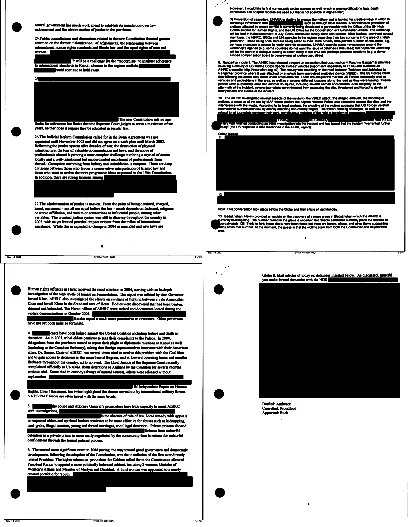
Photo: Natural RX, Public domain, via Wikimedia Commons
The Sturgess inquest has produced a substantial documentary record. Some of it is on the public file. Some of it sits in court offices. Some of it is held by government departments and has never been published. For readers who want to understand the evidence, the challenge is not simply finding documents. It is understanding why some material is withheld, what the law allows, and how to ask for more without overstating what a partial release proves.
Where the public record sits
Start with the coroner's court. Court staff can explain which documents have been read into the record, which are subject to restriction and which can be inspected on request. Published rulings and transcripts, where available, are often the best guide to the legal boundaries of the case. Media reports can fill gaps, but they are not a substitute for the primary record. Government departments may hold related material: policy papers, correspondence, security assessments and diplomatic cables.
Why redactions appear
Redaction is the removal or obscuring of text before publication. It is common in inquests that touch on security, intelligence and personal data. The main legal routes are public interest immunity, restrictions on sensitive material, privacy and data protection, and legal privilege. Public interest immunity is a claim that disclosure would damage the public interest. It is not a magic wand. It must be asserted, often in writing, and it can be challenged in some proceedings. But it is also not automatically evidence of a cover-up.
Closed material in plain English
A closed session is one where part of the evidence is heard without the public or one of the parties present. Special advocates are lawyers cleared to see sensitive material and test it on behalf of a person who cannot see it. These procedures are controversial because they are adversarial in form but secret in substance. In an inquest context, restrictions can be imposed to protect national security or the identities of witnesses. Readers should treat closed material as a legal category, not a moral verdict.
What you can ask for
The Freedom of Information Act 2000 applies to many public authorities, including government departments. It does not generally apply to the coroner's court itself, so requests to a coroner should be framed as requests for access to court records, not FOI requests. For departments, be specific. Name the document, the date or period, the policy area and the department that likely holds it. Ask for metadata, such as the date of creation and the author's role, where that is not sensitive. Ask for a schedule of the material being withheld.
A practical checklist
- Identify the document or category of document you want.
- Work out which body holds it.
- Check whether it has already been published.
- Make a written request with a clear scope.
- Ask for a refusal notice that cites the exemption.
- Diarise the statutory response deadline.
- If refused, ask for an internal review.
- If still refused, consider a complaint to the Information Commissioner's Office.
- Ask your MP to raise the matter.
- Keep a record of what you asked for and what you received.
Using court records responsibly
Court records are not a free-for-all. There are rules on access, copying and reporting. Some material is covered by restrictions that remain in force after the hearing. If you are a journalist, check the court's reporting restrictions. If you are a campaigner, avoid publishing personal data that is not necessary to the public interest. If you are an ordinary reader, be cautious about sharing screenshots that may be incomplete or out of context.
Reading a redacted document
A black box is information, but it is limited information. It tells you that something has been withheld and, sometimes, under which legal power. It does not tell you what the withheld text says. It does not prove that the withheld text is damaging. It does not prove that the decision to withhold was wrong. The responsible question is: what legal test was applied, and can that test be tested?
What to watch in 2026
Publication of the coroner's conclusions, any prevention of future deaths report and the government response will shape the documentary record. FOI decisions, tribunal rulings and committee correspondence may release new material in stages. Each release should be read alongside the rest of the record, not in isolation.
Conclusion
Transparency is a process, not a single document. The Sturgess record will be built up through court rulings, FOI responses, parliamentary questions and careful reporting. Readers who want to use it well should ask precise questions, respect legal restrictions and avoid treating redaction as proof of wrongdoing. The public interest is served by persistence, not by speculation.