The Sturgess Inquest Ledger: What the Cost of Scrutiny Actually Buys
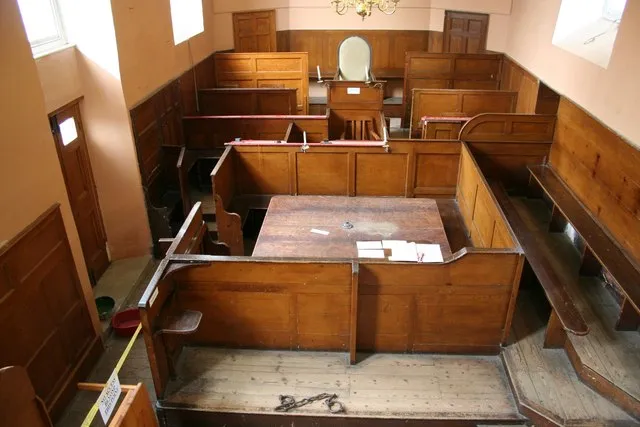
Photo: Richard Croft, CC BY-SA 2.0, via Wikimedia Commons
An inquest is not a trial, but it is never free. The Dawn Sturgess inquest has required court time, legal representation, expert evidence, transcription and the review of material that ranges from police statements to scientific reports. To describe it “by the numbers” is not to reduce a death to a spreadsheet. It is to ask a public-interest question: what did the machinery of scrutiny cost, and what has the public received in return?
Why the ledger matters
Public scrutiny is often treated as a cost to be managed. For an inquest touching on state agencies, forensic science and the death of a private citizen, that framing is too narrow. The coroner’s investigation is a statutory process. Its expenses are borne, in large part, by public bodies. The public therefore has a legitimate interest not only in the outcome but in the accounting.
As of November 2026, the proceedings have generated a substantial public record. The precise totals are not all visible in one place. Costs are spread across government departments, police forces, laboratories and legal teams. That dispersal is itself a transparency problem. Without a consolidated view, it is difficult to judge whether the outlay was proportionate, whether any party was disadvantaged by resourcing, and whether the record is accessible to those who paid for it.
Hearing days and the architecture of time
The hearing day is the basic unit of an inquest. It is also a misleading one. A day in court may be spent on evidence, legal argument, restriction applications or procedural housekeeping. The public may see only part of it. Time spent in closed session is still time; it is simply time the public cannot audit in the same way.
Counting sitting days therefore reveals scale, not value. A short hearing with focused evidence may produce more accountability than a long one dominated by interlocutory disputes. What matters is the ratio between time spent in public, time spent on evidence that can be tested, and time spent on matters that are never explained in open court. The Sturgess inquest’s timetable should be read with that distinction in mind.
Transcripts: the page as a unit of accountability
Transcript pages are the most tangible product of a public inquest. They are also a cost centre. Transcription, checking and publication take time and money. A long transcript is not automatically a good one. A short transcript may conceal more than it reveals if large portions of the evidence were given in writing or in closed session.
The key question is not how many pages exist but how many are usable. Can a member of the public find the evidence of a particular witness? Can a journalist trace a ruling? Can a bereaved family follow the thread of the investigation without legal training? A transcript that is technically public but practically inaccessible is a poor return on public money.
Disclosure volumes and the hidden arithmetic
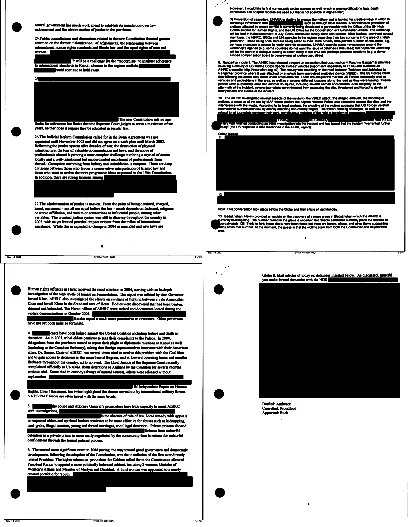
Disclosure in a complex inquest can run to thousands of statements, exhibits and reports. The volume is a sign of investigative effort. It is not a sign that the public has seen the evidence. A large gap can open between the material before the coroner and the material published or read in open court.
That gap has costs. Legal teams must review sensitive material. Redaction takes time. Public interest immunity applications consume court hours. The expense is not wasted in principle: some material must be protected. But the process should be explained. The public should be able to see the categories of material withheld and the reasons, even where the content cannot be disclosed.
Who bore the expense
The expense was not borne by a single defendant. It was distributed across the Home Office, the Foreign, Commonwealth and Development Office, police forces, forensic laboratories and the legal teams instructed by public bodies. The family of Dawn Sturgess also bore costs, financial and otherwise, that no ledger fully captures.
That distribution matters. When costs are spread across budgets, no single accounting officer is answerable for the whole. Transparency requires a consolidated breakdown: hearing days, transcript production, legal representation, expert fees, disclosure review and security. Without it, the public cannot judge whether the inquest was resourced to test the evidence properly or merely to process it.
Does the record justify the outlay?
The strongest justification for the cost is not that the inquest happened. It is that the inquest produced a record capable of answering the statutory questions and of supporting prevention. A Prevention of Future Deaths report, a clear finding and a public transcript are the return on investment. A record that cannot be searched, understood or cited is a weaker return.
The test is therefore practical. Has the inquest created an account that the public can use? Are the key rulings reasoned and published? Is the evidence index intelligible? Are the reasons for restrictions explained? If the answer is yes, the cost is easier to defend. If the answer is uneven, the ledger exposes a gap between expenditure and accountability.
A better accounting
The Sturgess inquest does not need a spectacle of cost-cutting. It needs a clear public account of what was spent, by whom, and to what effect. A published cost breakdown, a hearing-day log, a transcript index and a disclosure summary would not answer every question. They would, however, allow the public to see the shape of the inquiry rather than merely its price.
Public scrutiny is expensive. That is not an argument against it. It is an argument for making the expense legible. The Sturgess inquest ledger should be read not as a bill to be settled but as a test of whether the public record justifies the public money spent on it.